
Power Ranch Lawn Edging Services
Choose our expert lawn edging to give your yard a polished, professional look that enhances curb appeal and makes maintenance a breeze.
Get a Free QuoteOur Power Ranch Landscaping & Yard Care Services
When to Schedule Lawn Edging in Power Ranch, Arizona – Seasonal Guide
In Power Ranch, Arizona, the best times to schedule lawn edging are typically in early spring and late fall. These periods align with the region’s mild temperatures and lower risk of extreme weather, making it easier to achieve crisp, clean edges that last. The local climate, characterized by hot, dry summers and mild winters, means that edging during the peak heat or just before frost can stress your lawn and reduce the effectiveness of the service. Neighborhoods like The Groves and The Knolls often experience varying shade coverage and soil types, which can influence the ideal timing for edging. For example, areas with more clay-heavy soil or dense shade may require slightly different scheduling to avoid compaction or excessive moisture retention. Additionally, Power Ranch’s proximity to the San Tan Mountains can affect microclimates, so it’s important to consider your specific location. Always check for any municipal restrictions or seasonal guidelines, which can be found on resources like the Town of Sudbury’s website, to ensure compliance and optimal results.
Local Factors to Consider for Lawn Edging in Power Ranch
- Tree density and shade coverage in your yard
- Soil composition (clay, sand, or loam)
- Typical precipitation patterns and drought risk
- Frost dates and seasonal temperature shifts
- Terrain slope and drainage characteristics
- Municipal restrictions or HOA guidelines
- Proximity to local landmarks or microclimates
Benefits of Lawn Edging in Power Ranch
Enhanced Curb Appeal
Weed Growth Prevention
Defined Landscape Borders
Reduced Lawn Maintenance
Improved Drainage Control
Long-Lasting Results
Power Ranch Lawn Edging Types

Concrete Curb Edging
Concrete curb edging offers a durable and clean border for your landscape.
-
Brick Lawn Edging
Brick edging provides a classic and timeless look for garden beds and pathways.
-
Metal Landscape Edging
Metal edging delivers a sleek, modern appearance and long-lasting performance.
-
Plastic Lawn Edging
Plastic edging is a cost-effective and flexible solution for defining lawn boundaries.
-
Natural Stone Edging
Natural stone edging blends seamlessly with outdoor environments for a rustic feel.
-
Wood Landscape Edging
Wood edging adds warmth and a natural touch to garden borders.
-
Rubber Lawn Edging
Rubber edging is eco-friendly and safe, ideal for playgrounds and family yards.
Our Lawn Edging Process
Site Evaluation
Marking Edges
Cutting the Edge
Debris Removal
Final Inspection
Why Choose Power Ranch Landscape Services
-
Power Ranch Homeowners Trust Us
-
Expert Lawn Maintenance
-
Reliable Irrigation Solutions
-
Comprehensive Weed Control
-
Competitive Pricing
-
Professional Team
-
Satisfaction Guarantee
Coordinating Lawn Edging Services with Gilbert Public Works in Power Ranch
Power Ranch is a master-planned community within the Town of Gilbert, and lawn edging activities along residential frontages, sidewalks, and curb lines fall under the broader scope of municipal right-of-way maintenance expectations. When edging turf adjacent to public sidewalks, curb gutters, or drainage inlets, residents and property managers should ensure that grass clippings, soil debris, and organic material are not swept or blown into the street or storm-drain system. The Town of Gilbert's Public Works Department oversees street infrastructure, solid waste coordination, and environmental compliance programs that directly affect how landscape debris from edging should be managed. Green waste generated from edging operations—including grass trimmings and root material—must be collected and disposed of according to the town's current residential collection guidelines. Verify pickup schedules and accepted materials through the department before placing debris curbside.
- Keep all edging debris off public sidewalks, curb inlets, and street gutters
- Bag or contain grass clippings and root material for proper green waste collection
- Avoid edging into the public right-of-way without confirming property boundaries
- Report damaged curbing or sidewalk displacement caused by turf encroachment to the town
Gilbert Public Works Department
Official Website: Gilbert Public Works Department
How Power Ranch's Low-Desert Heat and Alkaline Soils Affect Lawn Edging
Power Ranch sits within USDA Hardiness Zone 9b in the Phoenix metro low-desert region, where summer temperatures routinely exceed 110°F and annual rainfall averages under eight inches. These conditions create specific challenges for lawn edging that differ substantially from temperate climates. The predominant soils in southeastern Gilbert tend toward alkaline sandy loam and compacted subdivision fill, often underlain by caliche hardpan at variable depths. This soil profile causes turf root systems—particularly in common bermudagrass—to spread laterally and aggressively into hardscape joints, expansion cracks, and decorative rock borders. Reflected heat from block walls, concrete driveways, and paver patios accelerates turf desiccation along edges, making these transition zones especially prone to browning and irregular growth. Irrigation overspray along edged boundaries frequently deposits mineral salts on hardscape surfaces, creating visible staining and contributing to soil salinity near turf margins. The USDA Plant Hardiness Zone Map confirms the extreme heat classification that governs turf behavior in this area.
- Bermudagrass stolons aggressively invade expansion joints and rock borders in alkaline, compacted soils
- Reflected heat from adjacent hardscape intensifies edge desiccation and browning
- Irrigation overspray along edged boundaries contributes to mineral salt deposits and hardscape staining
- Caliche layers restrict deep root development, pushing lateral growth toward edges
- Monsoon-season runoff can erode exposed soil along freshly edged turf margins
Navigating Power Ranch's Stormwater and Debris Regulations for Lawn Edging
Lawn edging in Power Ranch must comply with the Town of Gilbert's stormwater management obligations under Arizona's Phase II Municipal Separate Storm Sewer System (MS4) program. The Arizona DEQ stormwater program requires municipalities like Gilbert to prevent pollutants—including landscape debris, soil sediment, and fertilizer residue—from entering the storm-drain network. Edging operations that discharge clippings, soil, or organic matter into curb inlets or drainage channels may constitute a stormwater violation. The Gilbert Environmental Compliance division provides guidance on pollution prevention practices applicable to residential and commercial landscape maintenance. Property owners should also be aware that the Clean Water Act establishes the federal framework under which these local stormwater protections operate. Power Ranch's HOA may impose additional appearance standards for turf edge definition along community pathways and common areas; verify current community guidelines through the association.
- Edging debris must not enter curb inlets, retention basins, or storm-drain channels
- Soil sediment displaced during mechanical edging should be swept and collected, not hosed into the gutter
- Fertilizer or pre-emergent granules applied near freshly edged borders require containment to prevent runoff
- HOA landscape standards in Power Ranch may specify edge maintenance frequency and appearance
Gilbert Environmental Compliance
Official Website: Gilbert Environmental Compliance
Timing and Methods for Professional Lawn Edging in Power Ranch's Climate
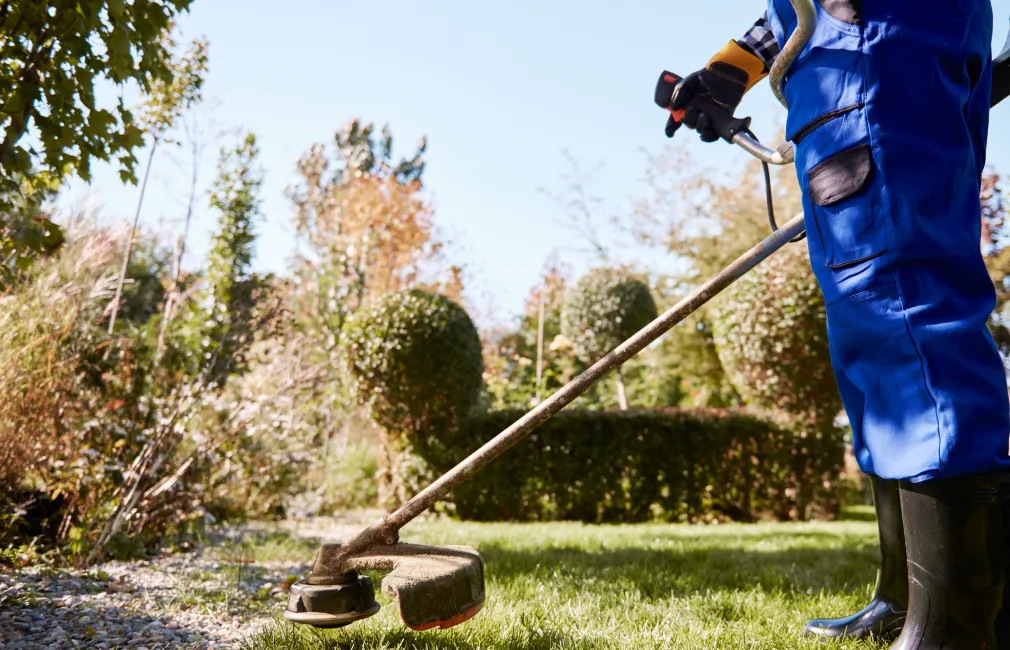
Effective lawn edging in Power Ranch requires alignment with the active growth cycles of warm-season turfgrasses common to the area. Bermudagrass, the dominant turf species in low-elevation Arizona, enters peak growth from late April through September, and edging during this window allows the turf to recover quickly from blade cuts along hardscape borders. The University of Arizona Cooperative Extension recommends maintaining bermudagrass at mowing heights between 0.5 and 1.5 inches, and edge definition should correspond to these heights to prevent scalping at turf margins. Mechanical rotary edgers and steel-blade stick edgers are standard tools, with blade depth typically set to cut through the top two to three inches of soil and root material along sidewalks, driveways, and curb lines. During winter overseeding with perennial ryegrass, edging frequency may increase as the cooler-season turf fills in along borders. The Turfgrass Maintenance Guide for low-elevation Arizona provides additional species-specific guidance relevant to Power Ranch properties.
- Edge bermudagrass during active growth (late April through September) for fastest recovery
- Set mechanical edger blade depth to approximately two to three inches along hardscape borders
- Increase edging frequency during winter ryegrass overseeding to maintain clean transition lines
- Schedule edging before irrigation cycles so exposed soil can absorb water rather than channeling runoff
- Avoid edging during peak afternoon heat to reduce operator fatigue and turf stress at cut margins
Gilbert Engineering Services
Official Website: Gilbert Engineering Services
What Neighborhoods Do We Serve Throughout Power Ranch, AZ?
- The Villages at Power Ranch — Mature bermudagrass lawns with extensive sidewalk and curb frontage require consistent edge maintenance to prevent stolon encroachment into concrete joints and decorative rock borders.
- Power Ranch Neighborhood Parks areas — Properties adjacent to community parks and recreational amenities often feature shared pathway borders where turf edging must maintain clear pedestrian access and clean visual lines.
- The Estates at Power Ranch — Larger lot sizes with extended driveway and patio hardscape create more linear feet of turf-to-hardscape transition requiring regular mechanical edging.
- Saguaro Shadows — Homes in this section frequently combine bermudagrass turf panels with decomposed granite and rock borders, demanding precise edging to prevent turf migration into xeriscape zones.
- Cortina at Power Ranch — Compact lot configurations with block-wall perimeters intensify reflected heat along turf edges, increasing the frequency of edge maintenance needed to address desiccation and irregular growth.